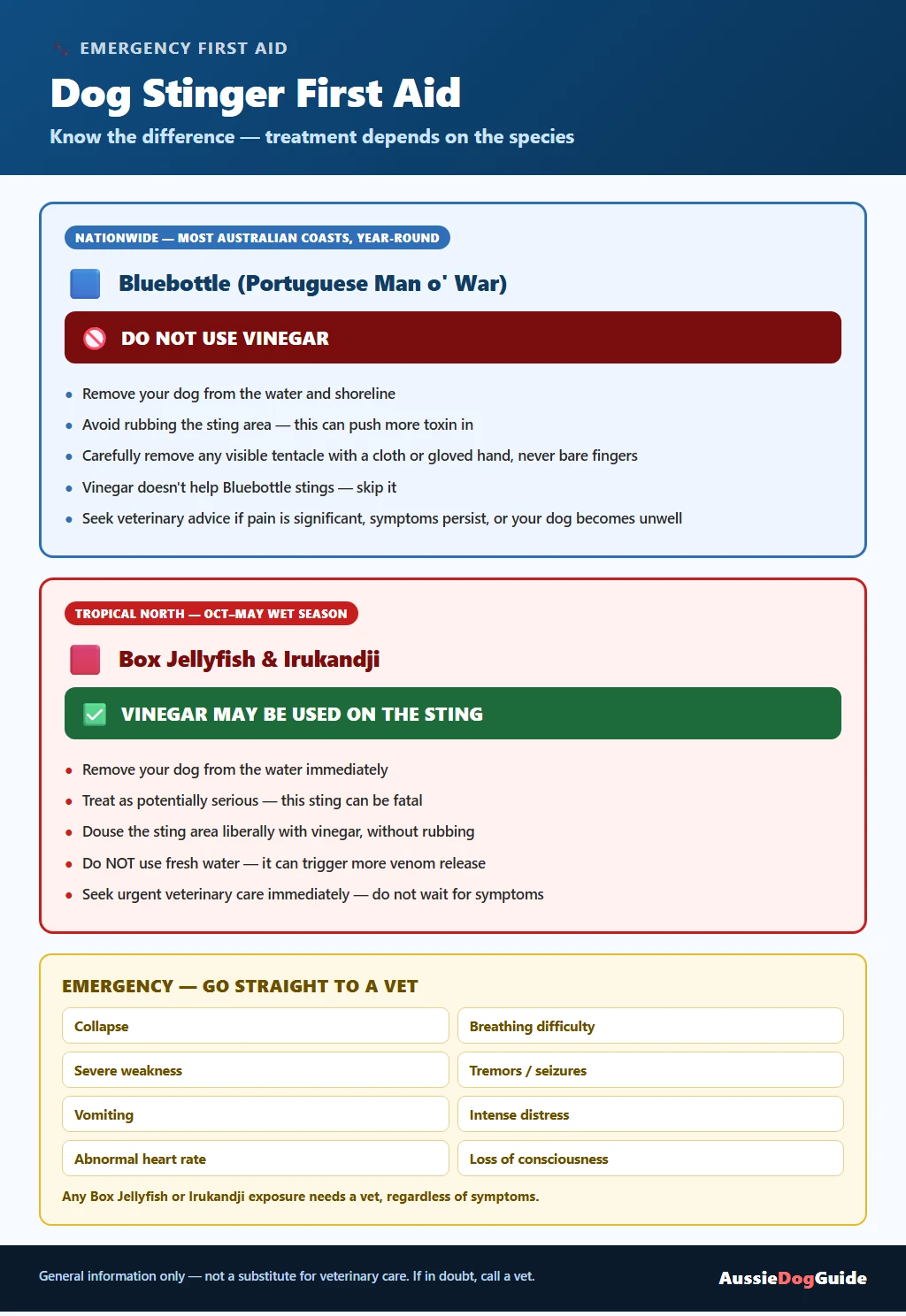
Marine stinger risk isn't the same everywhere in Australia, and the correct first aid isn't either — getting it wrong can make things worse. This guide covers the two groups that matter most for dogs: potentially dangerous tropical jellyfish (Box Jellyfish and Irukandji-type species) in northern Australia, and Bluebottles, which wash up along the eastern and southern coasts nationally.
Dogs are usually exposed by stepping on a washed-up tentacle, sniffing or licking a stinger, picking one up in their mouth, or eating a stinger they find on the sand — and a washed-up or apparently dead stinger can still sting. Don't assume a still, stranded jellyfish is safe to approach.
Know Your Stinger
Box Jellyfish & Irukandji
- Appearance: Transparent, cube-shaped bell with trailing tentacles
- Range: Tropical North — Gladstone northward to Darwin
- Season: October to May (wet season)
- Danger: Potentially fatal — cardiac arrest within minutes
Bluebottle (Portuguese Man o' War)
- Appearance: Electric blue float with a single long tentacle
- Range: National — all Australian coastlines
- Season: Year-round, peaks with NE winds
- Danger: Painful but rarely fatal — localised swelling
Emergency First Aid
⚠️ Critical: The treatment is DIFFERENT depending on the species. Using the wrong method makes it worse.
How you respond also depends on how your dog was exposed. A dog that briefly stepped on or brushed a tentacle is generally at lower risk than one that licked, mouthed or ate a stinger — oral exposure risks the mouth, throat and, if swallowed, the gut, so treat it more seriously and get veterinary advice sooner rather than waiting to see how things settle.
Block A: Box Jellyfish & Irukandji
Douse liberally with VINEGAR for 30 seconds
Vinegar neutralises unfired nematocysts. Pour it over the entire sting area without rubbing.
Do NOT use fresh water. It causes remaining stingers to fire, injecting more venom.
Seek a vet immediately. Box Jellyfish venom can cause cardiac arrest. Do not wait for symptoms.
Block B: Bluebottles
Do NOT use vinegar, and don't rub the area. Vinegar doesn't help Bluebottle stings, and rubbing can push more toxin from the tentacle into the skin.
Rinse with seawater and remove any tentacle carefully
Use seawater, not fresh water, to rinse off any remaining tentacle. If a tentacle is still stuck to the fur or skin, remove it with a cloth or gloved hand — never bare fingers.
Hot-water immersion is human first aid, not a settled dog treatment. Soaking the sting in hot (not scalding) water for around 20 minutes is the standard human approach to bluebottle pain — but there's no specific evidence this is safe or practical to do with a dog's paw or coat, and a painful, stressed dog is unlikely to hold still for it. Treat it as optional at best, and lean on veterinary advice instead of trying to replicate the human method.
Licked, mouthed or ate one? Treat it as more serious. Oral stings can cause drooling, pawing at the mouth, and swelling in the mouth or throat that affects breathing or swallowing. Get veterinary advice promptly rather than waiting to see how it settles.
Monitor for a worsening or allergic reaction. If your dog shows distress, swelling spreading beyond the sting site, or breathing difficulty, get to a vet.
Bluebottles and Dogs: Your Questions Answered
Short answers for the most common bluebottle questions. None of this replaces advice from your vet, and there are no doses here — don't give your dog any medication or home remedy unless a vet tells you to.
Are bluebottles poisonous to dogs?
Bluebottles sting rather than poison: the tentacles fire venom on contact. On a paw or the skin, a sting is painful and can cause local swelling. The bigger worry is a dog that licks, mouths or eats one. The Animal Poisons Helpline says dogs that swallow a bluebottle can be stung in the mouth and throat, with drooling, vomiting and swelling there. Breathing difficulty is described as uncommon, and allergic reactions are possible.
My dog ate a bluebottle. What should I do?
- Stop your dog eating any more and keep them away from other washed-up stingers. Don't rub the area, and don't handle tentacles with bare fingers.
- Call your vet or the Animal Poisons Helpline straight away for advice. Don't wait to see how they go.
- Go to a vet immediately for facial or throat swelling, trouble breathing, weakness or collapse.
Is a dead bluebottle on the beach still dangerous?
Yes. A washed-up bluebottle can still sting, and strong onshore winds can wash many of them ashore at once. Keep your dog on a lead and away from anything blue on the sand.
Should I use vinegar on a bluebottle sting?
No. Vinegar is for box jellyfish and Irukandji in the tropical north. For a bluebottle, rinse with seawater and remove any stuck tentacle with a cloth or glove (see Block B above).
Sources for this section: Animal Poisons Helpline Australia — Bluebottle Stings and Your Dog, plus the Beachsafe and Queensland Poisons Information Centre pages listed under Sources & Further Reading below. Dog-specific evidence is limited, so where a source covers humans only, this guide says so.
Prevention & Gear
Use a Biothane Long-Line
A waterproof Biothane Long-Line keeps your dog on the sand and out of the surf during stinger season. Essential for unnetted beaches like Pallarenda.
Stay Within Stinger Nets (Tropical North)
At beaches like The Strand in Townsville, only allow your dog near the water within netted enclosures during the season (Oct–May).
Pack a Sting Kit
Carry a small bottle of vinegar (for tropical box jellyfish country) and a bottle of seawater or a clean cloth (for bluebottles). Know which type of stinger is more likely where you're headed before you go.
Check Before You Unclip the Lead
Look up local beach warnings and stinger-season signage, then walk the shoreline before letting your dog explore off-leash. Be extra cautious after strong onshore winds, which can wash large numbers of bluebottles ashore. Keep dogs away from any washed-up jellyfish or tentacles — dead ones can still sting.
Can a Dead or Washed-Up Stinger Still Hurt My Dog?
Yes. Tentacles from a beached or apparently dead bluebottle can still fire and cause a sting, and dogs that mouth a dead one on the sand can develop mouth irritation or ulceration from contact with the remaining toxin. Treat any washed-up marine stinger — moving or still — as something to keep your dog away from, not something safe to sniff or pick up.
Which Symptoms Mean My Dog Needs a Vet?
Get Veterinary Advice
- A sudden yelp or obvious pain
- Pawing at the mouth or face
- Drooling
- Mouth or throat irritation
- Vomiting or retching
- Limping or reluctance to use a paw
Emergency — Go Now
- Facial or throat swelling
- Breathing difficulty
- Weakness or collapse
- Signs of a severe allergic or systemic reaction
- Seizures
- Any box jellyfish or Irukandji exposure, regardless of symptoms
Not every sting needs an emergency vet trip, but don't assume every sting can be managed at home either — mouth or throat involvement, or any of the emergency signs above, mean it's time to go straight in rather than wait and see.
Sources & Further Reading
Medical information checked against Australian health, poisons-information and veterinary-toxicology sources including:
- Healthdirect Australia — Jellyfish Stings
- Queensland Poisons Information Centre — Sea Creature Bites and Stings
- Beachsafe (Surf Life Saving Australia) — Bluebottle (Physalia)
- Animal Poisons Helpline Australia — Bluebottle Stings and Your Dog
The first three sources describe first aid for humans; only the Animal Poisons Helpline source addresses dogs specifically. Where dog-specific evidence was limited, this guide says so rather than assuming the human method applies. This guide has not been reviewed by a veterinarian and is not a substitute for professional veterinary advice for your individual dog.