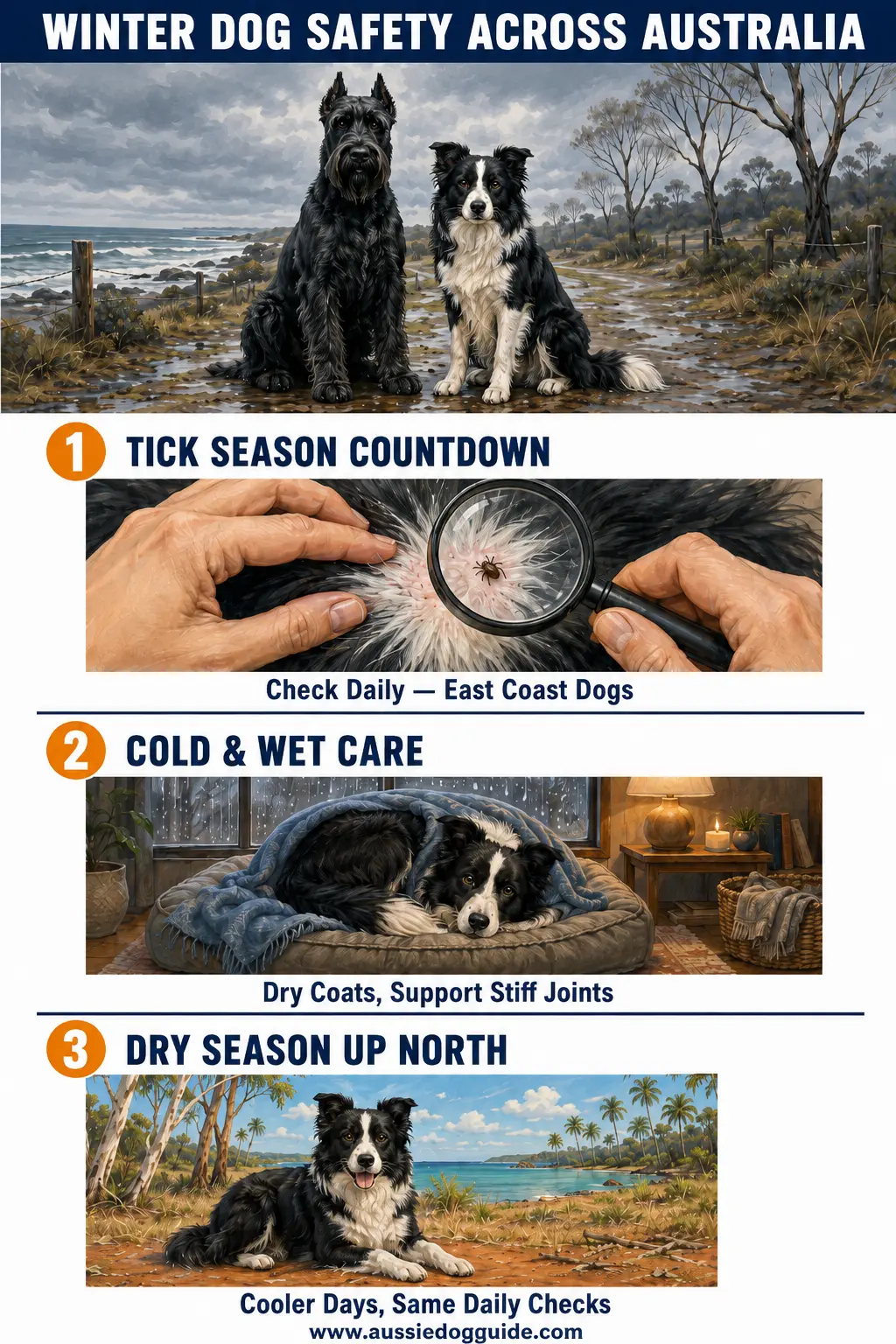
"Winter" doesn't mean one thing for Australian dogs. Tropical northern Australia might see mild, dry days with cooler nights; inland areas can swing from cold mornings to warm afternoons; southern coastal Australia gets prolonged cold, wet, windy stretches; and Tasmania and the alpine high country see genuine frost and snow. There's no single national answer to "does my dog need a coat this winter" — it depends on your local conditions, wind, rain, how long your dog is outside, and that dog's age, health, coat and body condition.
Winter, Region by Region
Tropical North (Northern QLD, NT, Northern WA)
Winter here is the dry season — substantially milder and drier than the south, comfortable by day but noticeably cooler overnight and in the early morning. There's rarely any need for a heavy winter coat. It's worth an extra layer on early walks for a genuinely cold-sensitive dog, being aware that parasite exposure patterns shift rather than disappear (see Parasites below), and, if your dog is heading south for winter, preparing them for a much bigger temperature drop than they're used to.
Subtropical / East Coast (Southern QLD, NSW)
Expect variable winters — mild days, cooler mornings and nights, and periods of rain. Winter doesn't switch off tick or flea risk on the east coast; the paralysis tick in particular stays active in nymph form through the colder months even as adult activity ramps up later in the year. Daily coat checks matter year-round here — see our Dog Parasite Prevention guide and Tick Safety guide for the full picture.
Temperate Southern Australia (VIC, TAS, Southern NSW, SA, Southern WA)
Lower temperatures, wind, wet weather, prolonged dampness, shorter daylight and colder outdoor surfaces are the story here. Wind and wet combined pull heat from a dog's body much faster than dry cold alone — a soaked, windblown dog can get cold surprisingly quickly even when the thermometer isn't extreme.
Alpine / Highland Areas
Snow, frost, ice and genuinely low temperatures make hypothermia and (less commonly) frostbite real risks here with prolonged exposure — see both sections below. This isn't the everyday suburban Australian winter experience; it's specific to genuinely cold, high-altitude or snow-affected areas.
Inland Australia
Large day/night temperature swings are the defining feature — a sunny, mild inland afternoon can follow a genuinely cold morning. Judge conditions by time of day rather than by a region's summer reputation for heat.
Which Dogs Feel the Cold More?
Dogs vary a lot. Short-haired dogs, very lean dogs, small dogs, very young or older dogs, dogs with chronic illness or reduced mobility, and dogs accustomed to warmer climates typically need more protection from the cold. Dogs with dense double coats generally tolerate cold better — but "generally" isn't "always": even a thick-coated dog can become dangerously cold with enough wind, wet and prolonged exposure. Greencross Vets Australia notes that short-haired or short-legged breeds are often less equipped for extreme cold, while dense double-coated breeds handle it better.
Does My Dog Need a Coat?
A coat can genuinely help short-haired, small, lean, older or medically vulnerable dogs, and any dog in genuinely cold, wet or windy conditions. But a coat isn't automatically needed for every dog — remove it if your dog gets too warm, never leave a wet coat sitting against the skin, make sure it fits properly, and don't let it restrict movement or toileting. Greencross specifically warns that dogs can overheat under an unnecessary coat during Australia's milder winter weather, so it's worth checking your dog isn't sweating under a jacket that the actual temperature doesn't call for. Coats aren't for wearing indoors around the clock either.
Signs Your Dog May Be Too Cold
Shivering is the obvious one, but it's not the only sign. Also watch for a tucked tail, seeking out warmth, reluctance to keep walking, whining, anxious or uncomfortable behaviour, lifting paws off cold ground, slowing down, or actively seeking shelter. Greencross Vets Australia lists shivering, a tucked tail, whining, seeking heaters or warmth, and wanting to turn around mid-walk among the signs a dog may be cold.
Hypothermia
Prolonged or severe cold exposure can lead to hypothermia. Warning signs include persistent, intense shivering, weakness, lethargy, poor coordination, becoming unusually quiet or unresponsive, progressive stiffness, and in severe cases, collapse.
If you suspect hypothermia: move your dog to a warm, dry environment, dry them off if wet, warm them gradually (never with a dangerously hot bath or direct intense heat), and contact a vet. Serious weakness, collapse, reduced responsiveness or exposure to severe cold needs urgent veterinary attention — this is genuinely a "call your vet" situation, not a wait-and-see one.
Frostbite
Frostbite is uncommon across most of Australia but can occur after prolonged exposure to severe cold, particularly in alpine or snow environments. Paws, toes, ears and the tail tip are the most vulnerable areas. Possible signs include pain, abnormal skin colour and swelling — and Greencross notes that frostbite often isn't obvious until tissue damage has already occurred, which is exactly why it shouldn't be assumed absent just because nothing looks wrong yet after a cold, wet outing. Don't rub or aggressively heat tissue you suspect is frostbitten — get it assessed by a vet instead.
Wet Dogs
A wet coat loses much of its insulating value. After rain, swimming, a beach trip, wet-grass walks or snow, dry your dog properly and give them access to a warm, sheltered spot — check long or dense coats for retained moisture close to the skin. Ordinary rain on an otherwise healthy adult dog isn't an emergency; it's simply worth a proper towel-off.
Arthritis and Senior Dogs
Greencross Vets Australia advises that cold weather can worsen arthritis signs, including stiffness, reluctance to move, limping and difficulty rising. Warm, comfortable bedding, keeping up appropriate regular movement, and avoiding sudden intense exercise after a long rest can all help. Not every bit of winter stiffness is arthritis, though — talk to your vet about any new or worsening mobility issue rather than assuming.
Winter Exercise
Dogs still need regular exercise and enrichment in winter — this isn't a season to skip it. In colder regions, pick a more comfortable part of the day, warm up gradually, adjust duration to conditions and to your individual dog, dry them off afterwards if wet, and keep senior dogs moving within their comfortable limits rather than stopping altogether.
Paws and Grooming
In cold or wet regions, check paws for irritation, cracked skin, and mud or debris between the toes; in snow-affected areas, inspect paws frequently, and note that road-salt or de-icing chemicals are only relevant where they're actually used, not a universal Australian household concern. Generally, keep an eye out for grass seeds, mud, matting and debris in the coat and feet — winter's wetter conditions make these more likely to get caught, not less.
Don't let the coat go ungroomed just to "keep it thick" for warmth — a longer winter coat still needs regular brushing, since matting reduces coat quality and traps moisture and dirt against the skin. Thoroughly dry dense coats after they get wet. Skip shaving a double-coated dog purely for grooming convenience; if in doubt about the right approach for your dog's coat, our Dog Grooming Tools guide has more detail.
Bedding, Shelter and Heater Safety
Dogs spending time outdoors need shelter from wind and rain, bedding that stays dry, protection from cold ground, and the ability to move somewhere more comfortable if they need to — an outdoor kennel doesn't automatically make prolonged severe cold safe. Indoor dogs need a comfortable, dry sleeping area too.
If you're using heaters or a fireplace: supervise your dog around them, prevent direct contact with hot surfaces, secure portable heaters so they can't be knocked over, and keep bedding well clear of any heat source.
Food and Body Condition
Most pet dogs don't need extra calories just because it's winter — calorie needs depend on activity, environment, body condition and the individual dog, not the calendar. Working dogs genuinely living and working outdoors in very cold conditions may need more, but for an ordinary companion dog, a healthy body condition stays the goal year-round.
Parasites in Winter
Winter doesn't mean ticks, fleas or worms are gone — risk varies by region, weather, parasite species and travel, not by season alone. Rather than a fixed seasonal schedule, our dedicated Dog Parasite Prevention guide and Tick Safety guide cover this properly — don't stop any preventative over winter unless your vet or the product guidance says to.
Winter Travel
A dog used to tropical Queensland, northern WA or the NT can find a trip south or to alpine/highland areas a much bigger temperature shock than expected — and a dog used to the cold still needs preparing for wet, windy or snowy conditions somewhere new. Before travelling, think about destination weather, bedding and shelter, a coat if appropriate, drying towels, medication, parasite requirements for where you're headed, and where the nearest emergency vet is. Our National Dog Travel Checklist is a good starting point.
Winter Doesn't Remove Heat Risk
Some Australian winter days are genuinely warm, and dogs can still overheat — during strenuous exercise, inside a parked vehicle, under an unnecessary heavy coat, or in the warmer northern regions. See our Tropical Dog Heat Safety guide for the full picture on that side of things.
Sources & Further Reading
- Greencross Vets Australia — How Can I Tell If My Pet Is Feeling The Cold?
- Greencross Vets Australia — What To Look Out For With Your Pet In Winter
- RSPCA Victoria — Hot Pet Tips for a Cold Winter
This guide has not been reviewed by a veterinarian; it is written for general education and checked against the sources above. It is not a substitute for professional veterinary advice for your individual dog.