Many everyday human foods are extremely dangerous to dogs. Some cause slow organ damage, others can act within hours. This guide highlights the most common and most dangerous foods Australian dog owners need to know about, and what to do if your dog eats one.
🚨 My dog just ate something toxic — what now?
Contact your vet or the Animal Poisons Helpline Australia on 1300 869 738 (24/7) promptly — don't wait to see if symptoms appear first. How serious it is depends on what was eaten, how much, your dog's body weight, when it happened, and the specific toxin, so there's no safe home calculation you can do yourself. Let the vet or poisons line work out the risk from the details you give them.
Do not make your dog vomit unless a vet or animal-poisons specialist specifically tells you to. Salt, hydrogen peroxide, mustard, or putting fingers down the throat are not safe home remedies and can cause additional harm.
Have This Ready When You Call
- The food or product name, and packaging or an ingredient list if you have it (take it with you, or photograph it)
- Roughly how much was eaten
- When it was eaten
- Your dog's approximate weight
- Any symptoms already showing
The 5 High-Risk Foods
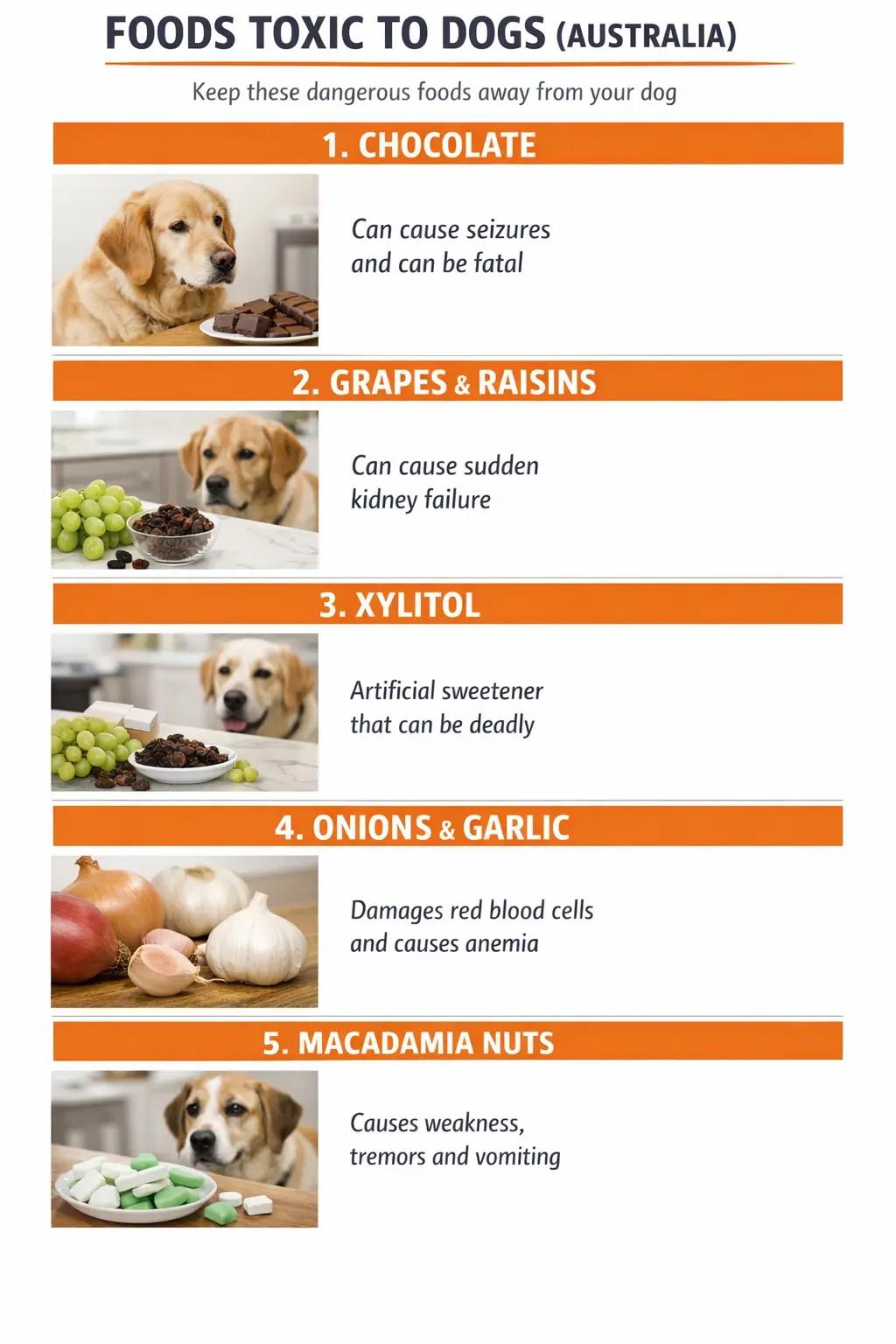
Chocolate
Contains theobromine and caffeine. Risk depends on the type and amount eaten and your dog's size — dark chocolate and cocoa products contain more theobromine than milk chocolate, so are generally more dangerous gram for gram. Watch for vomiting, diarrhoea, restlessness, a racing heart, tremors or seizures, and get advice promptly.
Grapes & Raisins
Can cause sudden kidney failure. There's no reliable "safe amount" — toxicity is unpredictable between dogs. This includes sultanas and currants, and any baked goods made with them (fruit cake, raisin bread, hot cross buns).
Xylitol
An artificial sweetener that can cause a rapid, dangerous drop in blood sugar and, in serious cases, liver injury. Found in sugar-free gum and confectionery, but also some baked goods, dental products, and vitamins or supplements — check the label rather than assuming, since not every sugar-free product contains it.
Onions & Garlic
Damages red blood cells and can cause anaemia. Toxic whether raw, cooked, powdered, or dried — cooking or drying does not make it safe. Includes chives and leeks too, and it's often hidden in sauces, gravies, seasoning mixes, takeaway food and leftovers.
Macadamia Nuts
Specifically recognised as toxic to dogs, unlike most other nuts — signs include weakness, lethargy, vomiting, tremors and difficulty walking. Other nuts aren't necessarily "safe" (fat content, obstruction risk, or mould are separate concerns), but macadamia toxicity is its own distinct issue.
If your dog eats any of these foods, contact your vet or the Animal Poisons Helpline immediately. Do not wait for symptoms to appear.
Alcohol & Raw Yeast Dough
Alcohol and alcohol-containing foods or drinks can poison dogs — possible signs include vomiting, poor coordination, weakness, breathing changes and collapse. Raw yeast dough is a related but separate risk: left to rise, it can keep expanding in a warm stomach, and the fermenting yeast produces alcohol as a by-product — so a dog that eats raw pizza or bread dough can face both a gastrointestinal problem and alcohol poisoning at once.
Other Foods & Hazards
Not every risky food works the same way — some are directly toxic, while others mainly cause obstruction, gastrointestinal upset or pancreatitis. Other items worth knowing about include:
- Mouldy or spoiled food, and compost — some moulds produce toxins, separate from ordinary food poisoning risk
- Caffeine and coffee products — a related risk to chocolate, via a similar class of compounds
- Avocado — can cause gastrointestinal upset in dogs
- Fruit stones and pits — obstruction risk, and some contain compounds that are toxic in their own right
- Mushrooms — wild/foraged mushrooms in particular can be genuinely toxic, not just an upset stomach
- Cooked bones — splinter and obstruction risk rather than a toxin
- Fatty foods (off-cuts, BBQ scraps, skin) — a common trigger for pancreatitis, not a toxin as such
Which Symptoms Should Concern Me?
Signs vary depending on what was eaten, and don't always appear straight away. Possible signs include:
Don't wait for any of these to appear before calling for advice — if you know or suspect your dog ate something on this page, that's reason enough to call.
What Will the Vet or Poisons Line Do?
What happens next depends on the toxin, the amount, the timing and your dog. It may involve a risk assessment based on what you tell them, decontamination where appropriate, activated charcoal in selected cases (only ever given by a vet — don't attempt this yourself), blood tests, fluids, and monitoring or treatment for neurological, cardiac or kidney effects. Not every ingestion needs every intervention — the plan is tailored to the actual exposure.
Reducing the Risk
- Store chocolate and sweets securely, out of reach
- Keep grapes, raisins and sultanas inaccessible — including fruit cake and similar baking
- Check sugar-free product labels for xylitol before assuming it's fine
- Keep handbags, shopping bags and pantry items out of reach
- Secure rubbish bins and compost
- Don't leave barbecue or party food unattended
- Keep medications well away from pet treats and food storage
- Teach children not to feed the dog human snacks without checking first
Sources & Further Reading
Medical information checked against Australian veterinary and animal-poisons sources including:
- Animal Poisons Helpline Australia
- RSPCA Australia Knowledgebase — Why Is Chocolate Toxic to Dogs and Other Animals?
- Greencross Vets Australia — Common Household Pet Poisons
This guide has not been reviewed by a veterinarian and is not a substitute for professional veterinary advice or the Animal Poisons Helpline for your individual dog's situation.
Food isn't the only backyard poisoning risk in Australia — see our Cane Toad Emergency Guide for what to do if your dog mouths a toad.