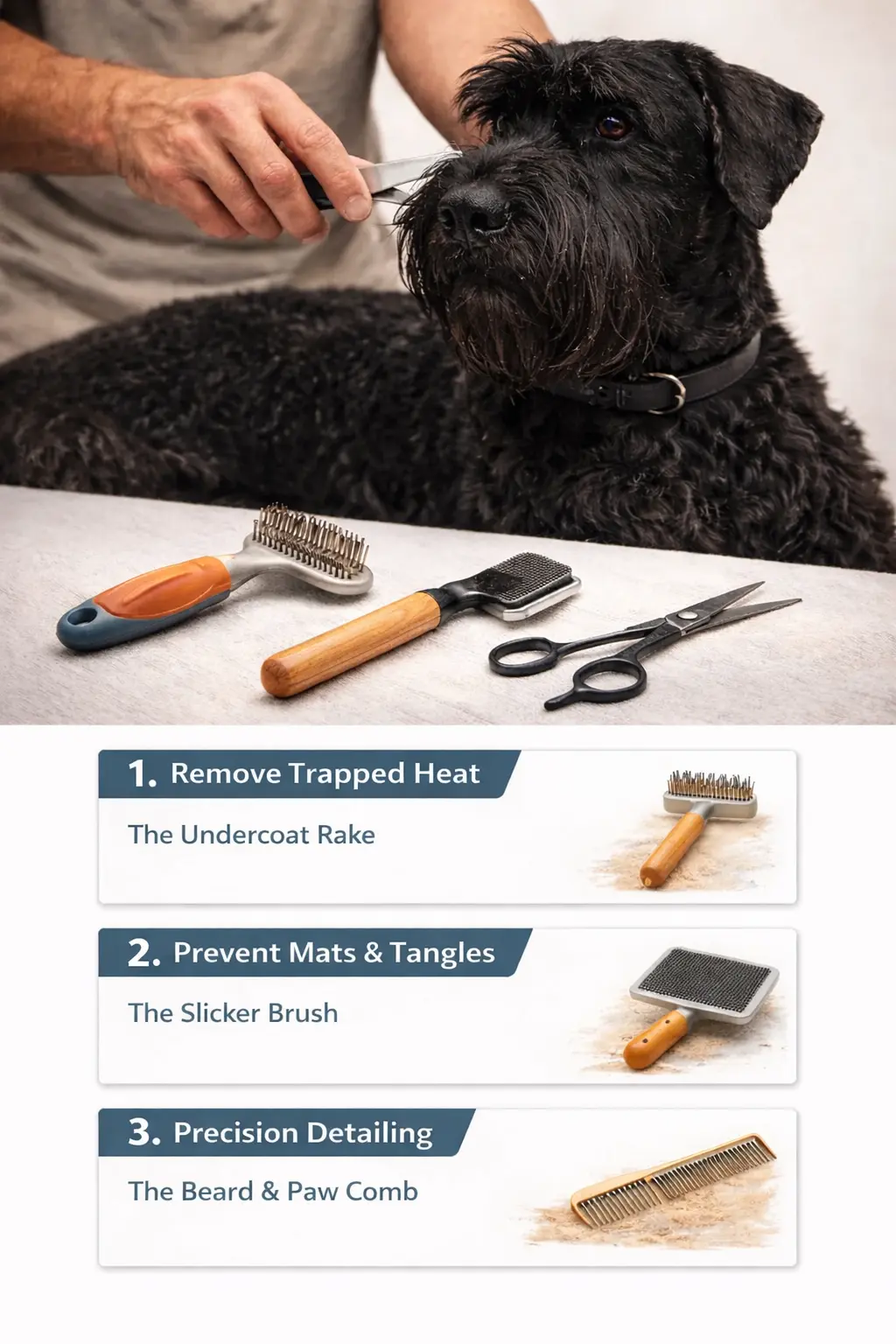
In the Townsville humidity, grooming isn't just about looking good—it's about health. Mats trap heat and moisture, leading to "Hot Spots." This guide covers the essential kit for maintaining double-coated and wire-haired breeds in the tropics.
The 3 Essential Tools
The Undercoat Rake
Vital for double-coated breeds. This tool removes the dead 'under-fluff' that traps heat against the skin. Removing this layer allows for better airflow and natural cooling.
The Slicker Brush
The daily go-to for preventing mats. In the Townsville humidity, damp fur can mat quickly. A 5-minute daily brush keeps the coat separated and healthy.
The Beard & Paw Comb
Specifically for Schnauzers and long-haired breeds. Keeping the facial hair and 'feathers' combed prevents food debris and 'burrs' from the local scrub from causing irritation.
Hand-Stripping vs. Clipping: The Wire Coat Debate
A Giant Schnauzer's coat isn't just "fur" — it's a harsh, wiry outer layer over a soft undercoat, and the two tools used to manage it produce genuinely different coats over time. Hand-stripping (pulling dead outer hairs by hand or with a stripping knife, in the direction of growth) keeps the wiry, weatherproof texture and natural colour banding intact, because it removes hair at the root on its own shedding cycle. Clipping (shears or clippers cutting the hair shaft) is faster and far less labour-intensive, but it cuts across every hair regardless of its growth stage — over repeated clips, the coat gradually softens, lightens, and loses the dense, water-resistant texture it was bred for.
Neither is "wrong." Stripping is the standard for show-conditioned wire coats and dogs that get dense scrub or long grass regularly, since the harsher coat sheds moisture and grass seeds more easily. Clipping is a reasonable trade-off for a pet-only routine — but if you clip, expect to brush more often, because a clipped coat mats faster once the softer undercoat is no longer protected by a harsh, straight outer layer.
Why Humidity Turns Matting Into a Health Issue
A mat isn't just tangled hair — it's a pocket that traps moisture, heat, and skin oils against the body. In Townsville's humidity, damp mats around the armpits, groin, and behind the ears become a breeding ground for the bacterial and yeast overgrowth behind "hot spots," and a heavily matted coat stops insulating and starts trapping heat instead — the opposite of what a healthy double coat is meant to do. Wire and double-coated breeds need the dead undercoat pulled out with a rake or stripping knife specifically because leaving it in place is what starts the mat; a slicker brush alone only skims the surface layer.
Beard & Eyebrow Upkeep in the Tropics
A Schnauzer's beard is functional, but it's also a sponge. Water, saliva, and food sit in it after every drink and every meal, and in tropical humidity that damp beard rarely gets a real chance to dry out between top-ups — left unchecked, that leads to "beard funk," a musty smell caused by bacterial and yeast build-up in the damp hair. Comb it out daily, towel-dry it after drinking where you can, and give it an occasional wash with a mild, dog-safe antibacterial shampoo rather than waiting for the smell to show up. Eyebrows need separate attention: overgrown brow hair traps dust, grass seeds, and pollen right against the eye, which in a high-pollen tropical wet season is a common trigger for irritation and conjunctivitis-like redness. Keep it trimmed clear of the eye rather than just pushed aside.
A beach trip on the Strand adds salt on top of humidity — see the Adventure Gear guide for post-swim rinse routines that keep salt from drying out a wire coat.