🚨 Heatstroke is a life-threatening veterinary emergency
If your dog may be overheating, start cooling immediately and contact a vet at the same time — don't wait to see whether things improve first. Heatstroke can happen anywhere in Australia, not just in the tropics, and it can progress fast.
Even if your dog seems to recover once you start cooling, they still need veterinary assessment — heatstroke can cause internal damage that isn't visible from the outside.
What To Do Right Now
STOP THE HEAT EXPOSURE
Move your dog into shade, an air-conditioned room, or any cool, well-ventilated space, and stop exercise immediately — even if you're "almost home" or "almost done."
START ACTIVE COOLING (NOT ICE)
Wet the fur and skin with cool or tepid water — a hose on a gentle setting, a bucket, or wet towels all work, avoiding the face. If using towels, keep re-wetting them; a towel left in place will warm up and act as an insulating wrap instead of cooling. Point a fan at the wet fur, or use car/room air-conditioning — the airflow across the damp coat is what does most of the work. Never use ice or ice-cold water; cooling too fast can be counterproductive.
CALL A VET WHILE YOU COOL
Phone a vet or emergency animal hospital and say you suspect heatstroke — do this alongside cooling, not after. If your dog is conscious, able to swallow normally, and interested, offer small amounts of cool fresh water, but never force water into the mouth. If your dog is collapsed, vomiting repeatedly, severely confused, seizuring, or can't swallow normally, don't try to get them to drink at all.
TRANSPORT PROMPTLY
Continue cooling on the way where practical, keep the car well-ventilated or air-conditioned, and get to the vet — don't cancel the trip just because your dog starts looking a bit better. One veterinary study found dogs cooled before arriving at the vet were substantially more likely to survive, so cooling and transport work together, not as alternatives.
Also Avoid
- Don't use ice, ice water, or an ice bath.
- Don't wrap your dog tightly in wet towels and leave them in place — refresh them or take them off once they've warmed up.
- Don't force water into the mouth, especially if your dog is collapsed, confused or struggling to swallow.
- Don't give human medications of any kind.
- Don't delay veterinary care to keep trying home cooling for longer.
- Don't assume looking better means the danger has passed.
Which Symptoms Mean What?
Don't rely on a single sign — heatstroke usually shows as a combination, and it can progress from mild to severe quickly.
Early / Concerning Signs
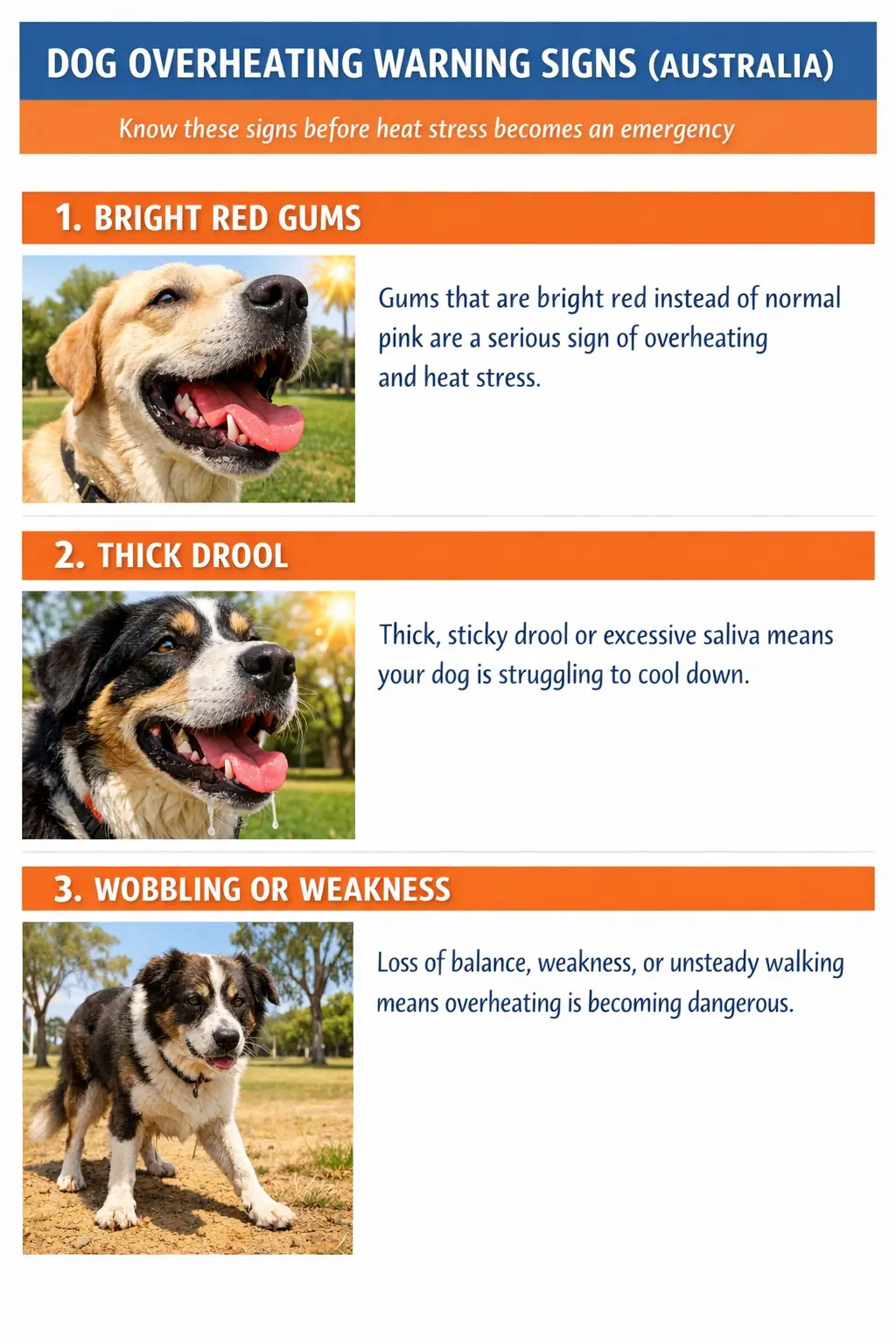
- Heavy or relentless panting
- Rapid breathing
- Excessive drooling
- Agitation or restlessness
- Bright red tongue or gums
- Increased heart rate
- Seeking shade or refusing to keep exercising
Serious Signs — Emergency
- Breathing distress
- Weakness, staggering or loss of coordination
- Confusion
- Vomiting or diarrhoea (may be bloody)
- Muscle tremors or seizures
- Very red or very pale gums
- Little to no urination
- Collapse or coma
Panting hard after normal exercise isn't automatically heatstroke — but get veterinary advice if panting is relentless or getting worse, recovery is poor once your dog stops moving, behaviour or coordination changes, gums or tongue look abnormal, or any serious sign above appears. If you're in doubt, call a vet rather than waiting to find out.
Which Dogs Are at Greater Risk?
Any dog can develop heatstroke, not just flat-faced breeds. Risk is higher with brachycephalic (flat-faced) conformation, obesity, thick or long coats, very young or older age, heart or respiratory disease, neurological conditions, dehydration, intense exercise, and hot, humid or poorly ventilated environments — factors RSPCA Australia specifically calls out.
Heatstroke Doesn't Need a Hot Car
Exercise-induced heatstroke happens without a vehicle involved at all — running, ball chasing, working, hiking, beach play or intense fetch sessions can all overheat a fit, enthusiastic dog, including on days that don't feel exceptionally hot, especially in humidity. A dog that loves the activity may keep going well past the point it should stop, so the decision to stop has to come from you.
Cars, Utes and Enclosed Spaces
- Never leave a dog unattended in a parked vehicle in warm conditions — cracked windows or shade don't make a hot car safe, and RSPCA Australia warns temperatures inside can climb dangerously within minutes.
- Dogs can also overheat, or burn their paws, on hot ute trays and metal surfaces.
Why Does My Dog Still Need a Vet?
Cooling is first aid, not treatment. At the clinic, a vet may provide controlled cooling, fluid support for hydration and circulation, monitoring of breathing and heart function, checks for neurological effects, and blood tests to look for organ, clotting or kidney complications that aren't visible from the outside. Not every case needs every intervention, and outcomes vary — but the internal effects of heatstroke can continue even after your dog looks calmer, which is why a normal-looking dog still needs to be seen.
Reducing the Risk
- Exercise during the cooler parts of the day
- Scale back intensity in hot or humid conditions
- Provide shade and good airflow at all times
- Keep fresh water available constantly
- Never leave a dog in a vehicle in warm weather
- Check pavement, sand and ute trays for surface heat before your dog walks on them
- Adjust activity for your dog's age, fitness, breed and any medical conditions
For a fuller, region-by-region look at everyday heat management, see our Tropical Dog Safety guide — this page focuses on what to do once overheating is already a concern.
Sources & Further Reading
Medical information checked against Australian veterinary and animal-welfare sources including:
- RSPCA Australia Knowledgebase — How Can I Protect My Dog From Heatstroke?
- Greencross Vets Australia — Heat Stroke & Stress in Dogs
- Animal Emergency Service Australia — Heat Stroke in Dogs
This guide has not been reviewed by a veterinarian and is not a substitute for professional veterinary advice or emergency treatment for your individual dog.