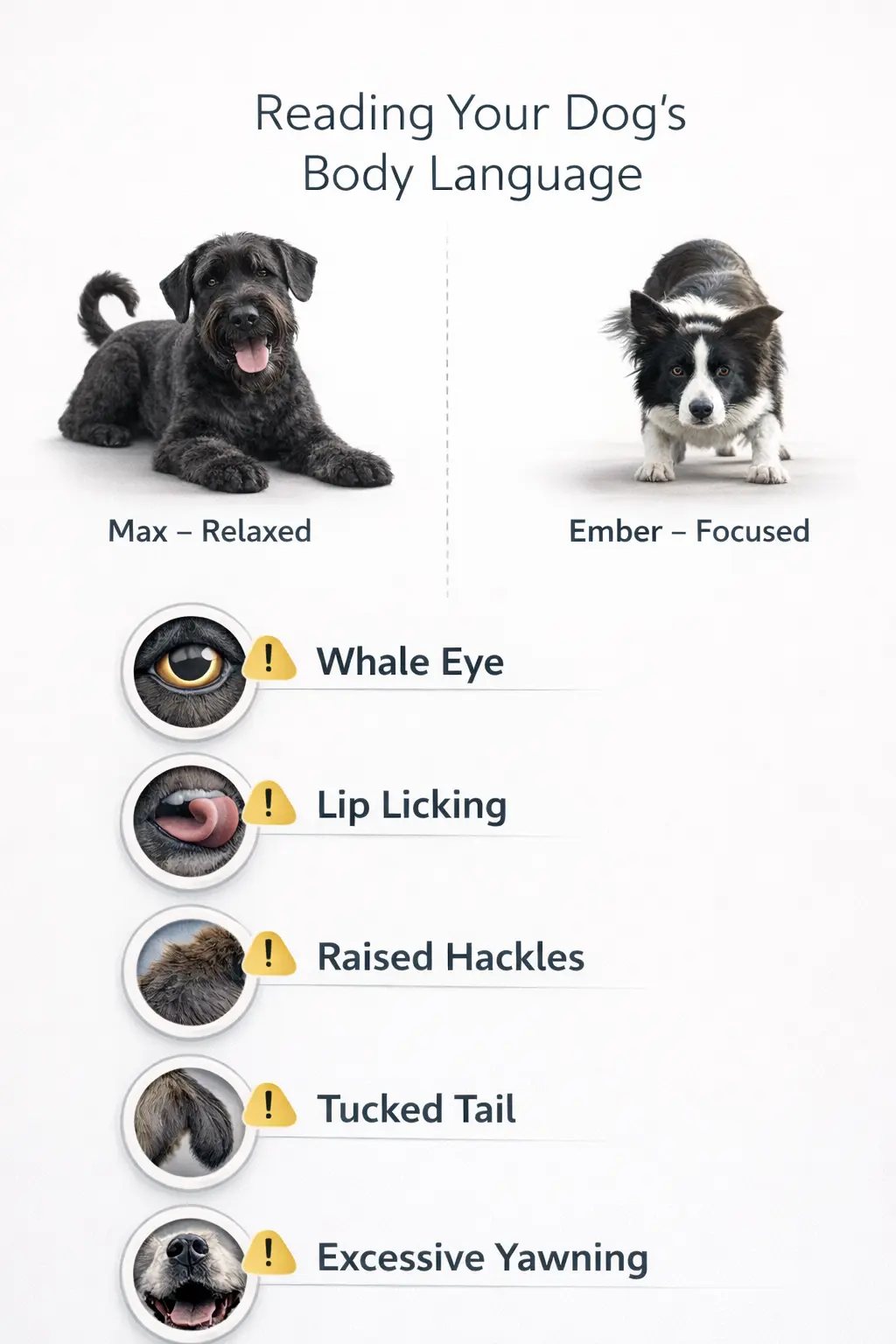
Recognizing the silent signals of your dog is the most important skill for any owner, especially when handling high-drive breeds like Giant Schnauzers and Border Collies. In the heat of Townsville, understanding these cues can prevent over-stimulation and conflict.
The Comparison: Max vs. Ember
😌 Relaxed (Max Mode)
- Soft eyes
- Relaxed "doggy smile" (mouth open)
- Neutral, loose body posture
🧐 Focused (Ember Mode)
- Intense stare
- Forward-leaning weight
- Ears pinned toward target (High Arousal)
The 5 Red Flags (Stress Indicators)
- 👀 Whale Eye (Ocular Signs of Stress): This occurs when a dog rigidly averts their head slightly but keeps their gaze locked on a perceived threat, causing the white sclera around the edge of the eye to become highly visible. If you notice a dog showing the whites of their eyes, it means they are feeling intensely pressured, anxious, or cornered. This is a critical warning sign to back off before the dog feels forced to defend themselves.
- 👅 Lip Licking (Displacement Behaviour): When a dog flicks their tongue out to lick their nose or lips outside of meal times, they are exhibiting a classic canine displacement behaviour. Similar to a human nervously tapping their foot, lip licking is an involuntary self-soothing mechanism used to vent rising internal anxiety or signal submission when a situation feels unpredictable.
- ⚡ Raised Hackles (Piloerection): Formally known as piloerection, the hair along a dog's spine standing on end is a pure adrenaline response managed by the autonomic nervous system. While many owners mistake this for automatic aggression, it actually signifies intense emotional arousal or hyper-stimulation. It simply means the dog is on high alert, absorbing massive environmental data.
- 🐕 Tucked Tail (Fear Submission): Drawing the tail tightly between the hind legs against the belly is the universal visual sign of a fearful or structurally defensive dog. By tucking the tail, a dog physically protects their vulnerable underbelly and limits the dispersal of their scent glands, effectively trying to make themselves appear smaller and completely non-threatening.
- 🥱 Excessive Yawning (Stress De-escalation): When a dog yawns rapidly in a non-sleeping context, they are actively attempting to lower their heart rate and de-escalate their own internal pressure. Physiological stress yawning helps oxygenate the blood stream when adrenaline spikes. If your dog begins yawning during training or on a walk, it's a clear indicator that their cognitive load has maxed out.
Herding Breed Body Language: Border Collie and Australian Shepherd
Border Collie body language and Australian Shepherd body language share a distinctive herding signature: both breeds use intense, direct eye contact, a low, sweeping tail set, and a crouched forward posture when aroused. Their eye contact is not aggression — it is a controlled, predatory focus inherited from stock work. An Australian Shepherd may hold a "soft" but steady gaze and lower its body parallel to the ground, while a Border Collie often locks eyes with a target and stalks silently. Owners should read these signals as high arousal, not hostility, and redirect the dog before the intensity escalates.
Got a herding breed? See our dedicated Border Collie & Australian Shepherd body language guide for the eye, the stalking crouch, and the herding bark.