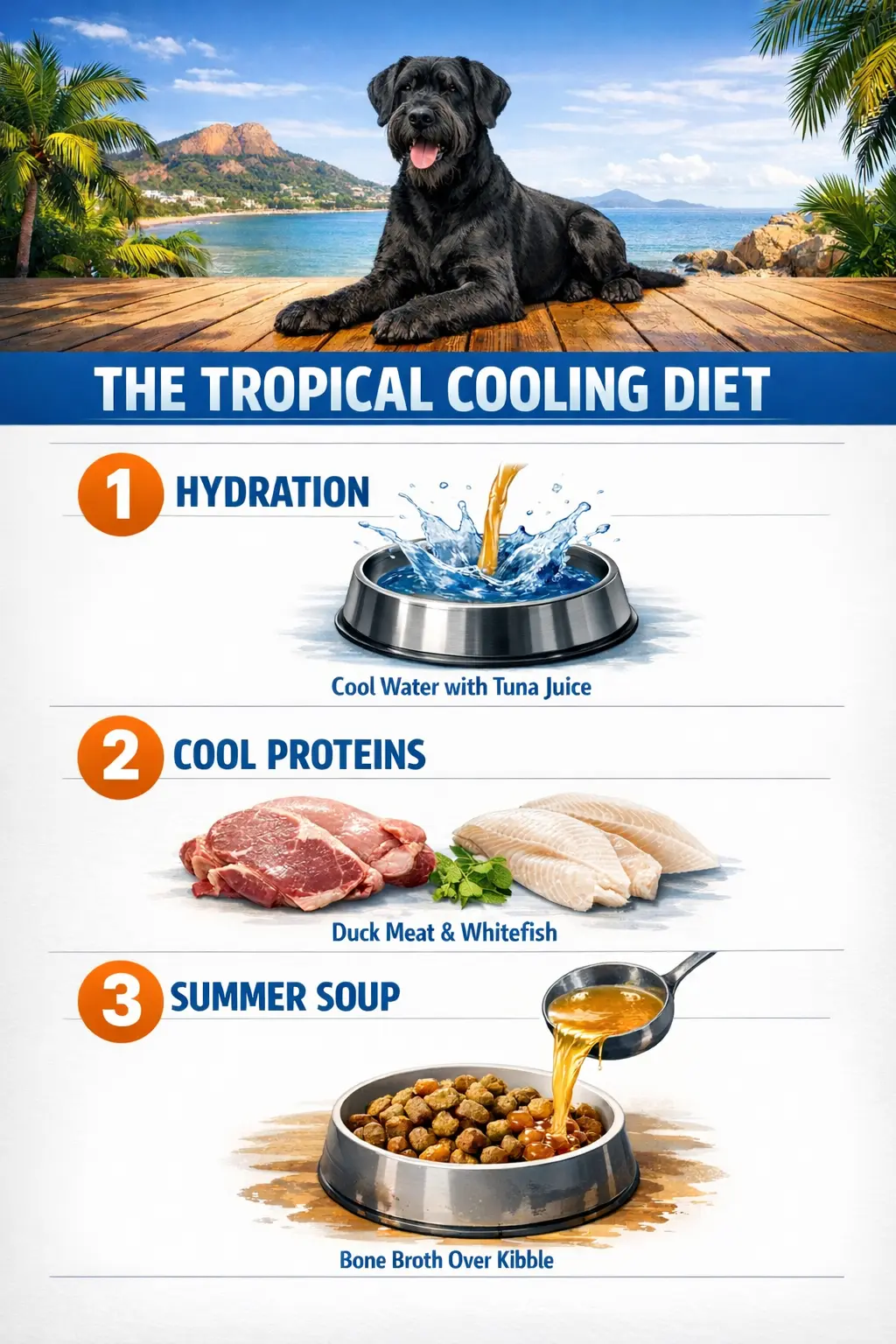
Practical hydration, feeding and food-enrichment ideas for hot Australian weather — a companion to our heat-safety and emergency guides, not a substitute for either.
Food can't cool a dog's body the way water, shade, airflow and rest can — no ingredient physiologically lowers core temperature in a clinically meaningful way. What food choices can do is support hydration, keep a hot-weather dog eating comfortably, and add a bit of enrichment to a day when exercise is limited. This guide focuses on that — for everyday exercise and environment management, see our Tropical Dog Safety guide; for what to do if heatstroke is suspected, see the Dog Overheating Emergency Protocol.
🚨 Already showing signs of heat stress?
Weakness, confusion, staggering, vomiting, breathing difficulty, collapse or seizures mean it's time for the Dog Overheating Emergency Protocol and a vet — not a change of diet.
Hydrating, High-Water Foods
A genuinely useful, evidence-simple idea: foods that are mostly water add moisture to your dog's day and make excellent frozen enrichment. Served frozen, they're also literally cold — a real, physical cooling sensation, not a metabolic claim.
💧 Hydrating Snacks Worth Freezing
- Cucumber — mostly water, safe in slices or frozen batons.
- Celery — high water content and crunch; fine frozen in stock.
- Watermelon (seedless, no rind) — hydrating, low-calorie, good frozen cube.
What Does TCVM Mean by a "Cooling" Food?
You may see foods like duck, whitefish or salmon described as "cooling" proteins, and others like chicken or lamb described as "warming." That comes from Traditional Chinese Veterinary Medicine (TCVM) food energetics, which classifies foods as "cooling," "neutral" or "warming" based on their traditional energetic effect on the body. This is a traditional dietary framework, not a concept established by mainstream veterinary nutritional science — there's no evidence that eating duck rather than chicken changes a dog's body temperature. If a TCVM-trained veterinarian is guiding your dog's diet for a specific reason, that's a legitimate specialty practice; but choosing "cooling" proteins isn't something owners need to do for ordinary heat management, and there's no need to avoid otherwise suitable proteins like chicken or lamb on this basis. Whatever protein your dog eats, regular meals should stay complete and balanced for their life stage — see below.
Complete and Balanced Comes First
Treats, toppers and hot-weather food ideas on this page are meant to sit alongside your dog's regular diet, not replace a meaningful share of it. If your dog is on a prescription, elimination, kidney, gastrointestinal or other therapeutic diet, check with your vet before adding toppers, broth or new treats — even "healthy" additions can undermine why that diet was prescribed in the first place.
Encouraging Your Dog to Drink
Fresh Water Is the Priority
Keep multiple bowls available, refresh water regularly (especially once it's warmed up or gone stale), and carry water on longer walks or outings. Some owners find a small amount of flavour — a teaspoon of low-sodium tuna juice, for instance — helps encourage a reluctant drinker; if you try this, keep it genuinely small, avoid high-salt brines, and always keep plain fresh water available too rather than relying on flavoured water alone. Wet food also contributes extra moisture to the day, but it doesn't replace access to drinking water.
Frozen & Chilled Enrichment
Freezing appropriately portioned, dog-safe foods — or your dog's normal food in an enrichment toy — gives a pleasant, slower activity on a day when exercise is limited. It's genuinely useful enrichment and can encourage a hot, less interested dog to eat or drink, but it's not prevention or treatment for heatstroke, and shouldn't be relied on as one.
Adding Water to Meals
Duncan's Summer Soup
Some dogs eat less enthusiastically in hot weather, and softening a meal with warm water or a splash of cooled, unsalted bone broth can make it more appealing while adding moisture. If using bone broth, make sure it's dog-safe — no onion, garlic or other unsafe ingredients, and no added salt. It isn't nutritionally necessary, it doesn't replace fresh water, and it isn't a heatstroke-prevention measure — it's simply one practical way to add a bit of extra moisture and appeal to a meal.
Appetite Changes in Hot Weather
A milder drop in appetite during very hot weather is common and not automatically a concern — it isn't a reason to overhaul your dog's normal diet. Persistent loss of appetite, lethargy, or any other signs of illness are a different matter and warrant a chat with your vet rather than a diet change on your own.
Body Condition Matters More Than "Cooling" Foods
Overweight and obese dogs are at increased risk of heat-related illness. Keeping your dog at a healthy body condition is more relevant to heat safety than choosing foods labelled "cooling" — though this isn't a weight-loss guide, and any diet change for weight should be discussed with your vet.
Food Safety in Hot Weather
Heat also raises ordinary food-safety risks: don't leave wet or raw food sitting out for long periods, refrigerate perishables promptly, keep bowls clean, and discard anything that's spoiled. Take extra care with food storage when travelling or camping with your dog in warm weather.
Sources & Further Reading
Checked against Australian veterinary and nutrition sources including:
- Australian Veterinary Association — Nutrition of Dogs and Cats
- RSPCA NSW — Heat Stress
- Greencross Vets Australia — Heat Stroke & Stress in Dogs
- Animal Emergency Service Australia — Heat Stroke in Dogs
- American Journal of Traditional Chinese Veterinary Medicine — Chinese Food Therapy Energetics of Common Canine and Feline Dietary Ingredients (traditional framework reference, not mainstream veterinary nutritional evidence)
This guide has not been reviewed by a veterinarian and is not a substitute for professional veterinary or nutritional advice for your individual dog.