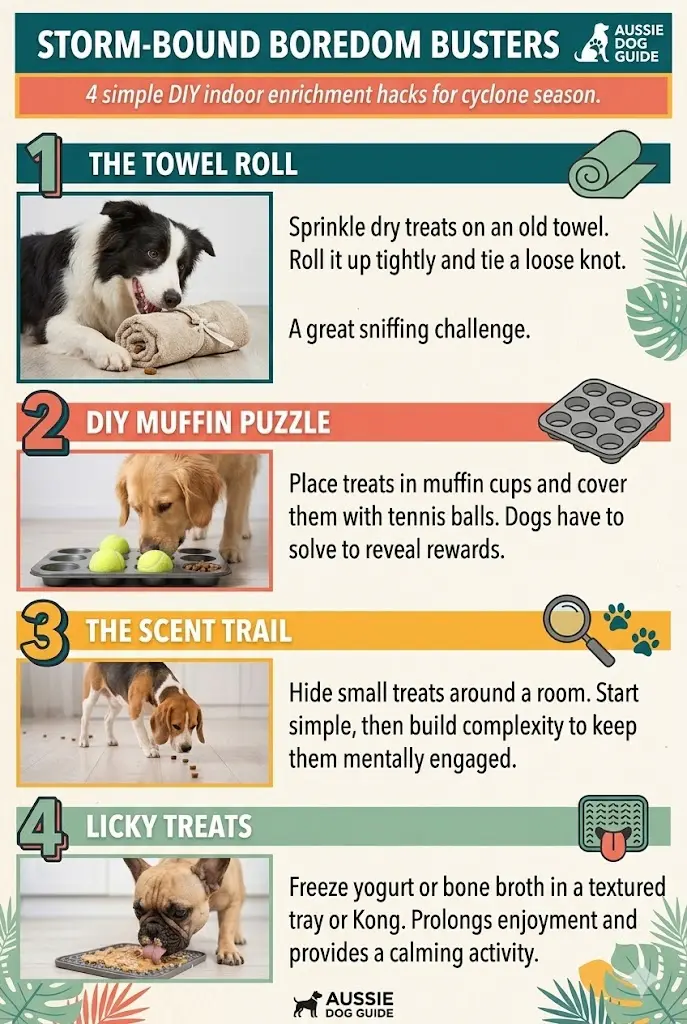
When a thunderstorm, cyclone or severe wind and rain rules out normal outdoor exercise, mental occupation can help fill some of that gap. These 4 simple DIY activities give a dog something predictable and engaging to do indoors while the weather passes — they're about safe indoor occupation, not a treatment for storm phobia or anxiety.
4 Indoor Activities for Storm Days
THE MUFFIN TIN PUZZLE
Put treats or part of your dog's normal meal in a muffin tin and cover the cups with tennis balls or similar objects your dog can nose or paw aside. Start easy — cups only partly covered — before making it harder. Supervise, and use objects too large to swallow.
THE TOWEL BURRITO
Scatter treats along an old towel, then roll or fold it loosely so your dog has to sniff and work them out. Supervise dogs that tend to shred or eat fabric, and stop the activity if your dog starts ingesting the towel rather than just working it.
CARDBOARD BOX SHREDDING
For dogs that genuinely enjoy shredding, tearing and searching, a safe delivery box (tape, staples and any plastic removed first) can be a good outlet. This isn't a fit for every dog — skip it for one that swallows cardboard rather than just shredding it, and supervise throughout.
THE 'FIND IT' CIRCUIT
Hide treats, kibble or a favourite toy in a few safe spots around the room. Start simple and easy to find, then build up the difficulty as your dog gets the idea. Many dogs seem to settle well after a good sniffing session, though there's no fixed exchange rate between minutes spent sniffing and minutes spent on a walk.
Because the locked infographic for this guide also features a licking-based option: a lick mat, stuffed food toy, or frozen enrichment (where appropriate) is a fine fifth idea for a calmer storm day — it's a genuinely useful option, not something that treats storm anxiety. See Dog Enrichment Tools & Activities for the full explanation of licking-based enrichment and for year-round sniffing, puzzle, chewing and problem-solving ideas beyond storm days.
Several of these activities use food, so use part of your dog's normal meal where you can rather than adding treats on top, to avoid excess calories on a day your dog may already be less active.
Dogs used to running, herding, working, or generally high activity levels can struggle more when a storm suddenly takes normal exercise off the table. Mental work like the activities above can help fill part of that gap, but it doesn't fully replace the exercise itself — expect some extra restlessness on a storm day even with good indoor occupation.
Keep the activity space free of exposed electrical hazards, on safe flooring, with reasonable airflow and a comfortable temperature. If your dog is panicking, unable to eat, trying to escape, or otherwise highly distressed, don't push a game on them — a distressed dog needs a quieter retreat or professional support, not more engagement. See the Cozy Corner guide if your dog would rather settle somewhere quiet than play, and the Storm Safety Blueprint for storm preparation and household safety. If distress is severe or persistent, that's a job for veterinary or qualified, reward-based behavioural support.
Pair these indoor activities with our Storm Safety Blueprint for the full storm-preparation plan.